# in your CS02 repo, the file is at "data/pm25_data.csv"
pm <- read_csv("OCS_data/data/raw/pm25_data.csv") |>
  # these are ID codes, not measurements
  mutate(across(c(id, fips, zcta), as.factor),
         # from EDA: most cities have only 1-2 monitors; "Not in a city" is the biggest group
         city = case_when(city == "Not in a city" ~ "Not in a city",
city != "Not in a city" ~ "In a city"))14-cs02-analysis
2026-11-13
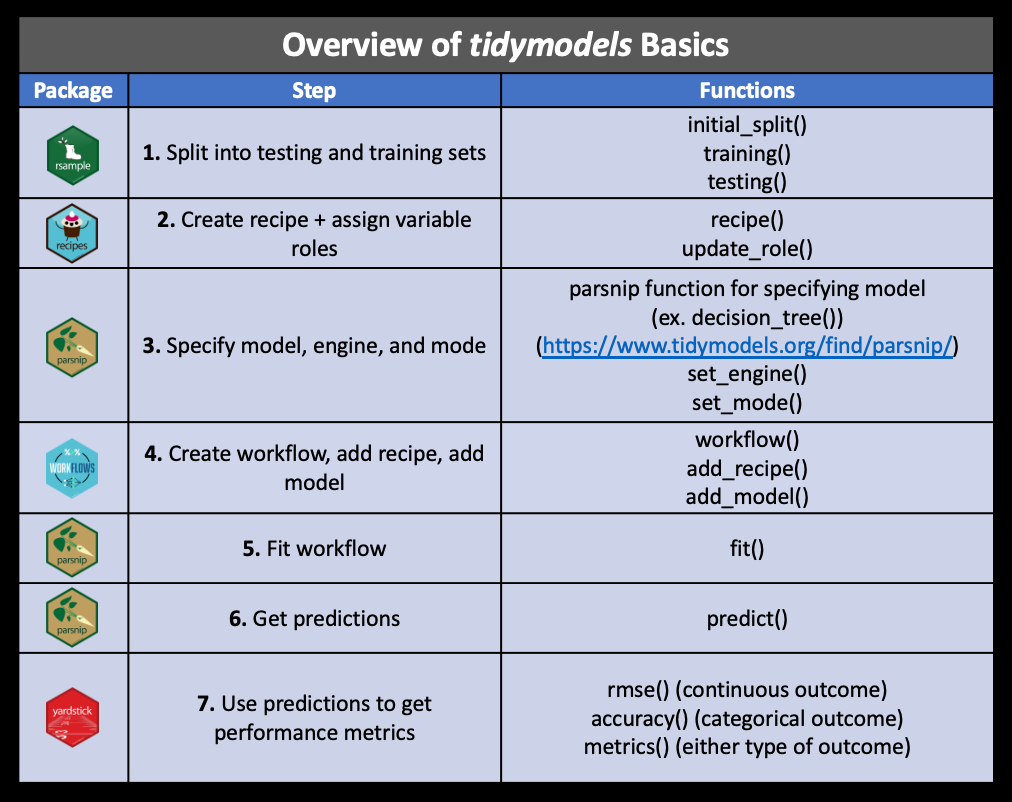
Building our tidymodels knowledge:
Data Splitting
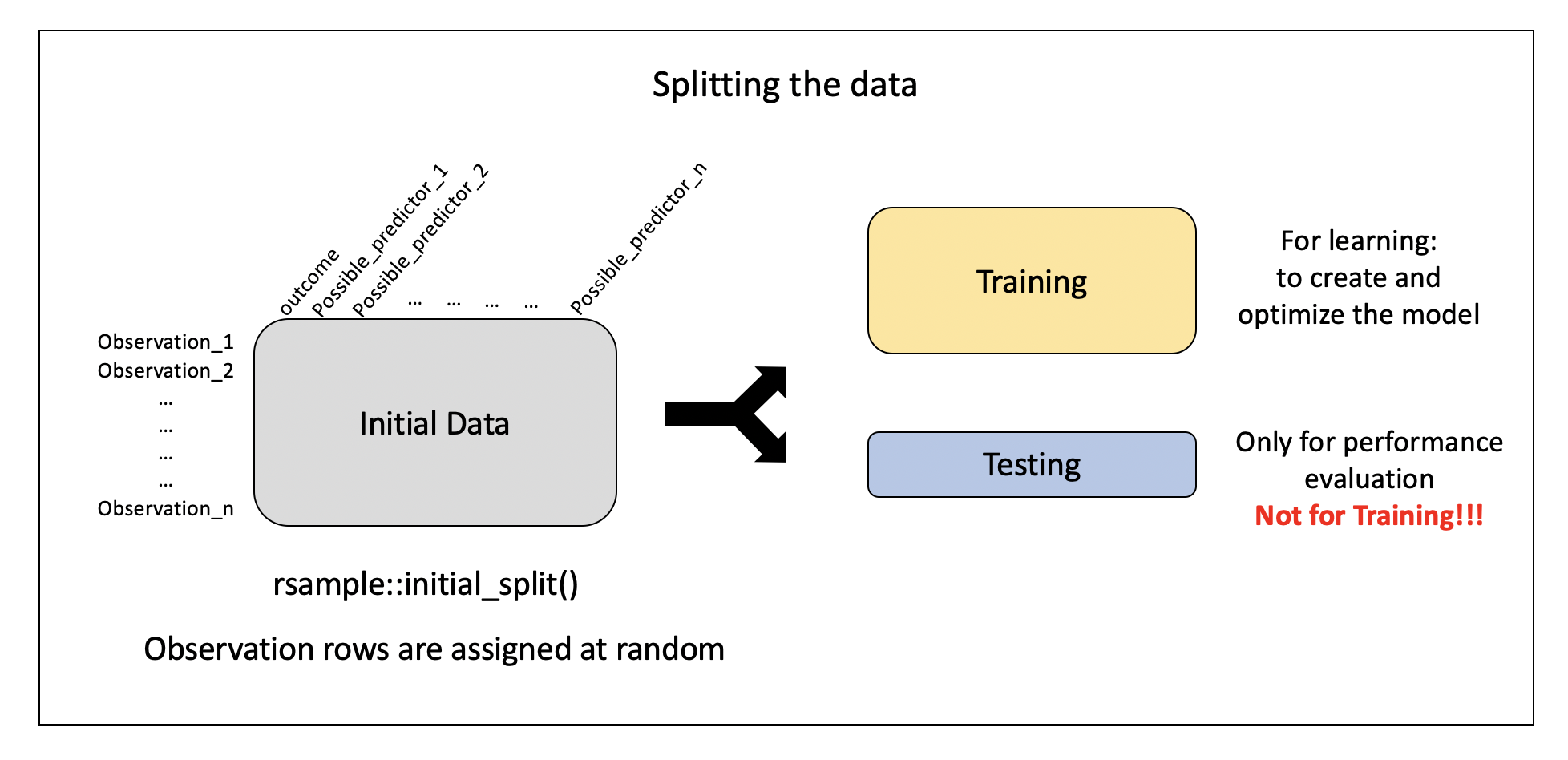
Specify the split:
<Training/Testing/Total>
<584/292/876>set.seed<- ensures we all get the exact same random split- output displayed:
<training data sample number, testing data sample number, original sample number>
More on how people decide what proportions to use for data splitting here
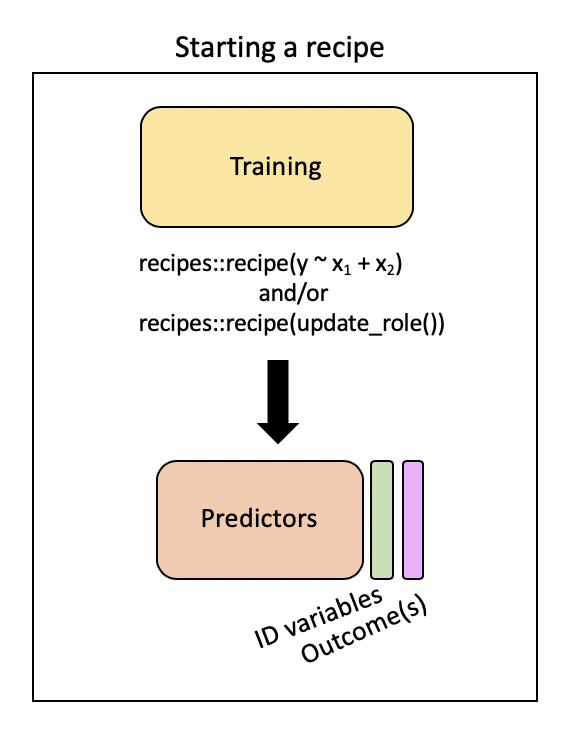
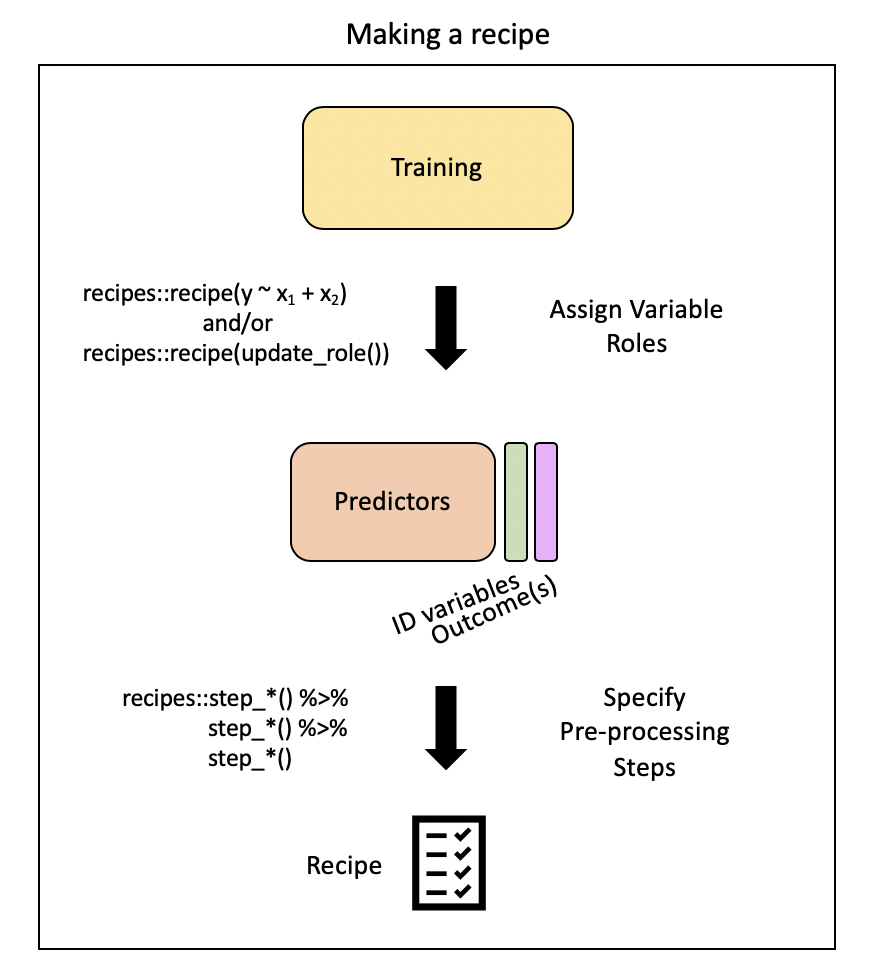
Pre-processing: recipe() + bake()
Need to:
- specify predictors vs. outcome
- encode categorical variables as numbers
- remove redundant variables (feature engineering)
recipe provides a standardized format for a sequence of steps for pre-processing the data
Step 2: Pre-process with step*()
Step 4: Extract pre-processed training data using bake()
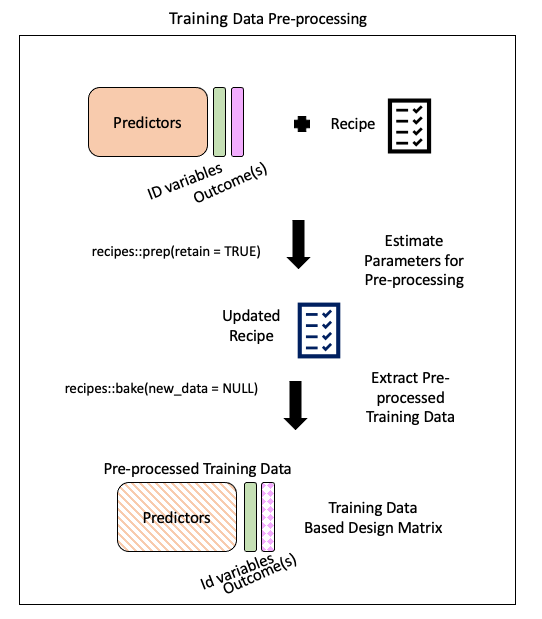
bake(): apply our modeling steps (in this case just pre-processing on the training data) and see what it would do to the data
[1] 584 39 [1] "id" "value"
[3] "fips" "lat"
[5] "lon" "CMAQ"
[7] "zcta_area" "zcta_pop"
[9] "imp_a500" "imp_a15000"
[11] "county_area" "county_pop"
[13] "log_dist_to_prisec" "log_pri_length_5000"
[15] "log_pri_length_10000" "log_pri_length_25000"
[17] "log_prisec_length_500" "log_prisec_length_1000"
[19] "log_prisec_length_5000" "log_prisec_length_10000"
[21] "log_prisec_length_25000" "log_nei_2008_pm10_sum_10000"
[23] "log_nei_2008_pm10_sum_15000" "log_nei_2008_pm10_sum_25000"
[25] "popdens_county" "popdens_zcta"
[27] "nohs" "somehs"
[29] "hs" "somecollege"
[31] "associate" "bachelor"
[33] "grad" "pov"
[35] "hs_orless" "urc2006"
[37] "aod" "state_California"
[39] "city_Not.in.a.city" new_data = NULLspecifies that we’re not (yet) looking at our testing data- We only have 39 variables (36 predictors + 2 id variables + outcome)
state,county,city, andzctabecame 0/1 columns (one-hot encoding)…thenstep_nzv()dropped most of them, since nearly every value is 0state_Californiais the only state column left: California has by far the most monitors, so it’s the only state column that isn’t near-zero variance
Step 5: Will this recipe work on new data?
bake()takes a trained recipe and applies the operations to a data set to create a design matrix. For example: it applies the centering to new data sets using these means used to create the recipe. -tidymodelsdocumentation
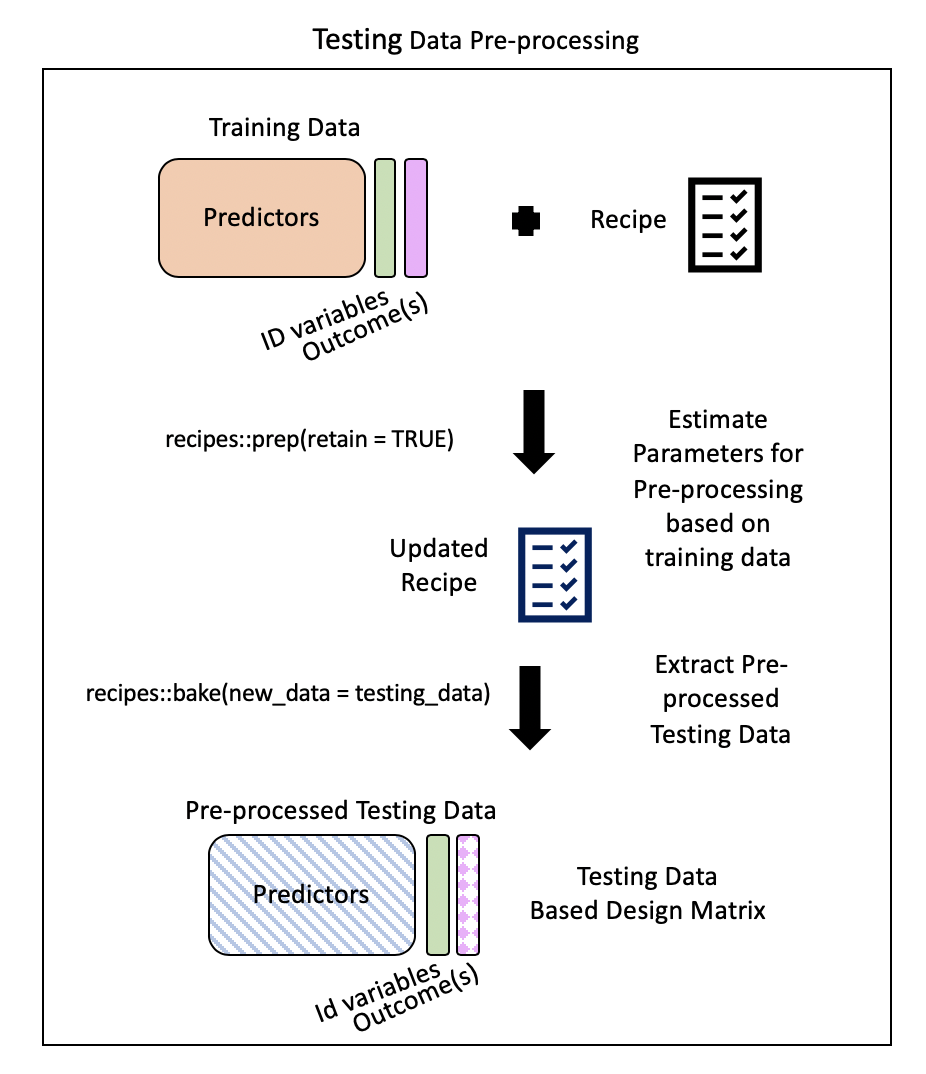
- Eventually, the recipe gets applied to the test set (and to any new monitor)…but we won’t bake the test set ourselves:
last_fit()does that, once, at the very end - So we ask, using only the training data: will this recipe break on data it hasn’t seen?
Step 4 (cont.): Variable importance
Understanding what variables are most important in our model…
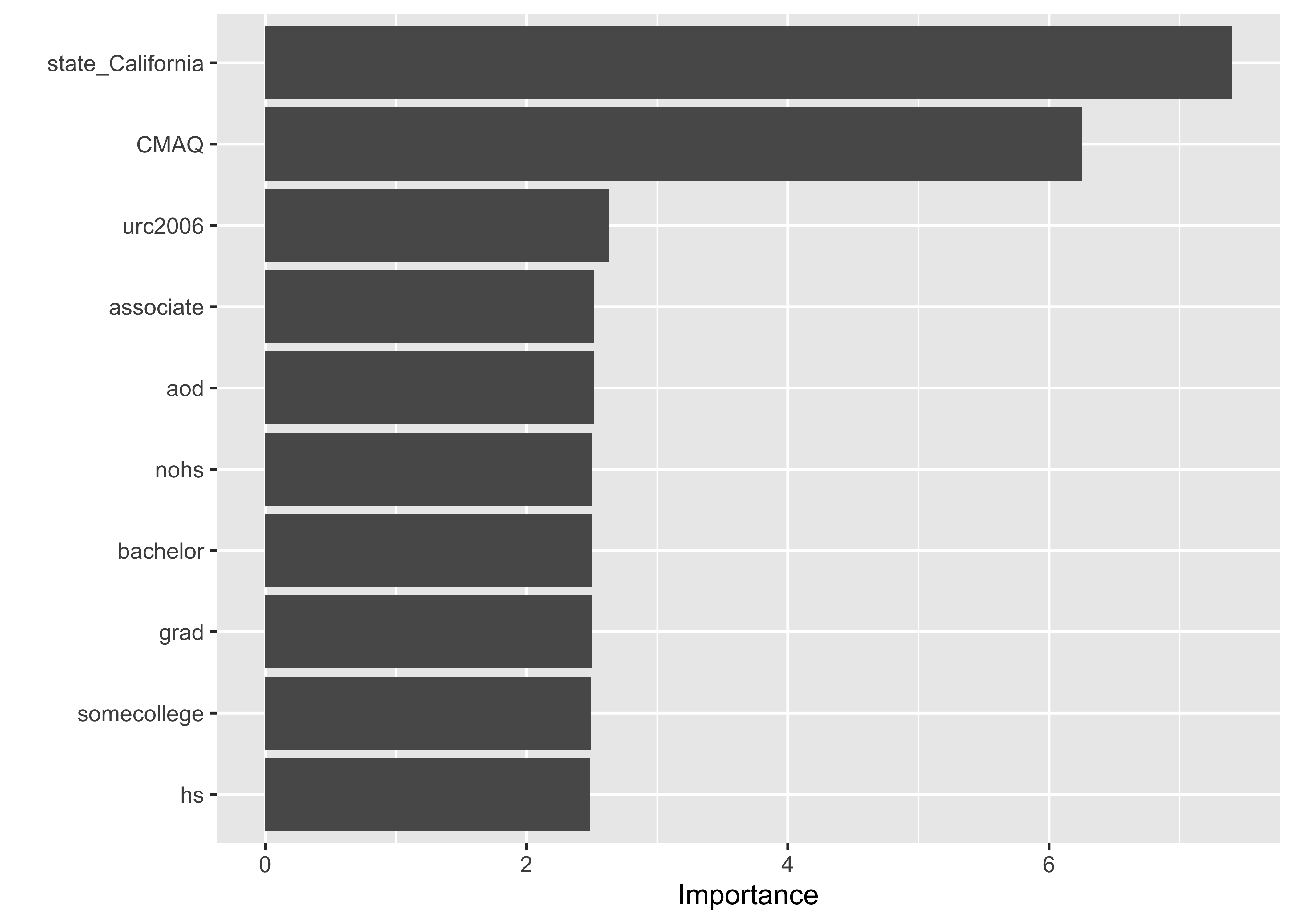
- For
lm, “importance” is the absolute value of each coefficient’s t-statistic (its size relative to its uncertainty) - It tells us what the model leans on, not what causes pollution
Step 4 (cont.): A closer look at California
ca_plot <- baked_train |>
  mutate(state_California = as.factor(state_California)) |>
  mutate(state_California = recode(state_California,
                                   "0" = "Not California",
                                   "1" = "California")) |>
  ggplot(aes(x = state_California, y = value)) +
  geom_boxplot() +
  geom_jitter(width = .05) +
  xlab("Location of Monitor")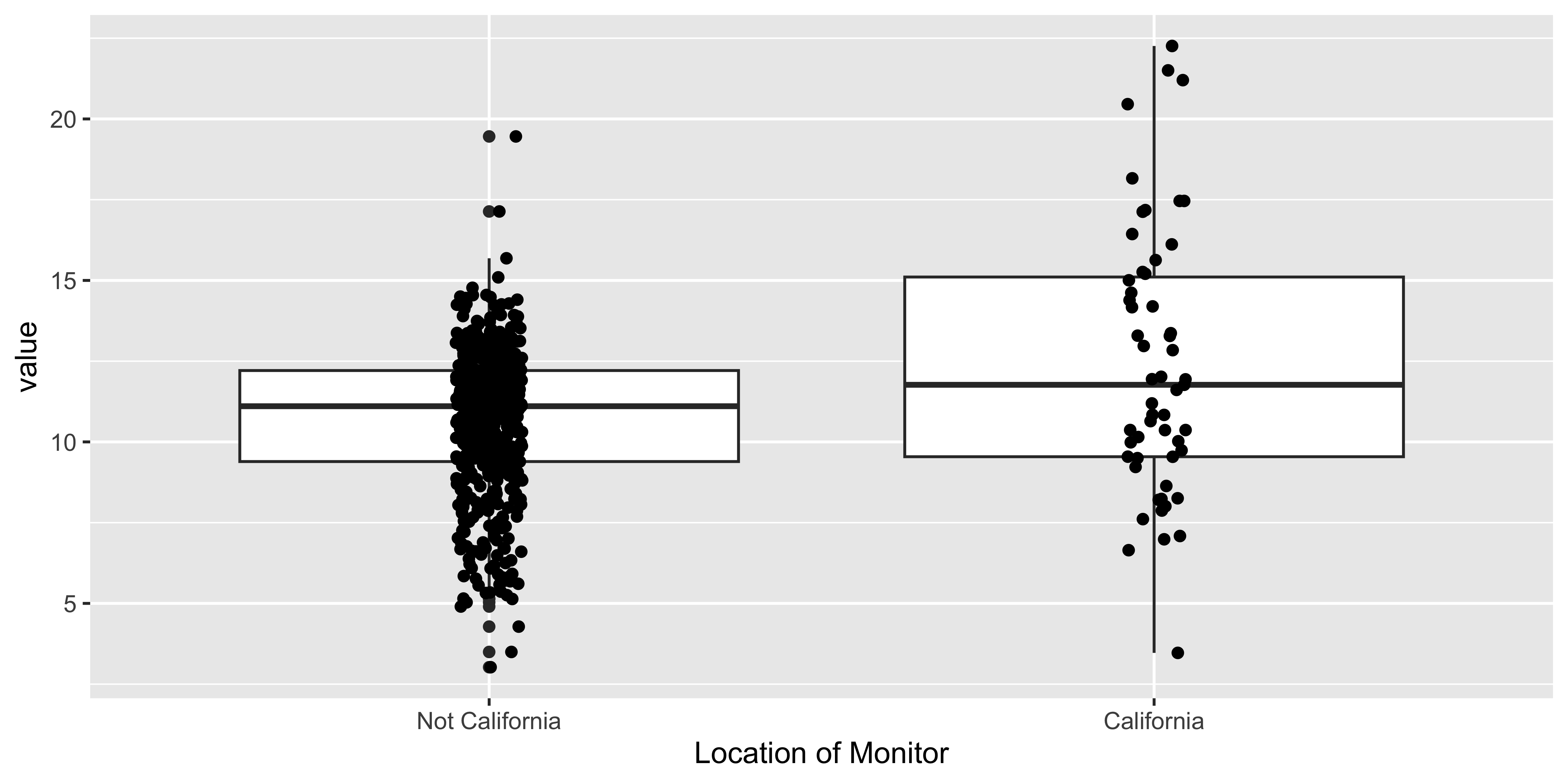
- California is the only state with enough monitors for its dummy (
state_California) to survivestep_nzv() - California monitors read higher on average, which is why the model finds
state_Californiauseful
Visualizing Model Performance
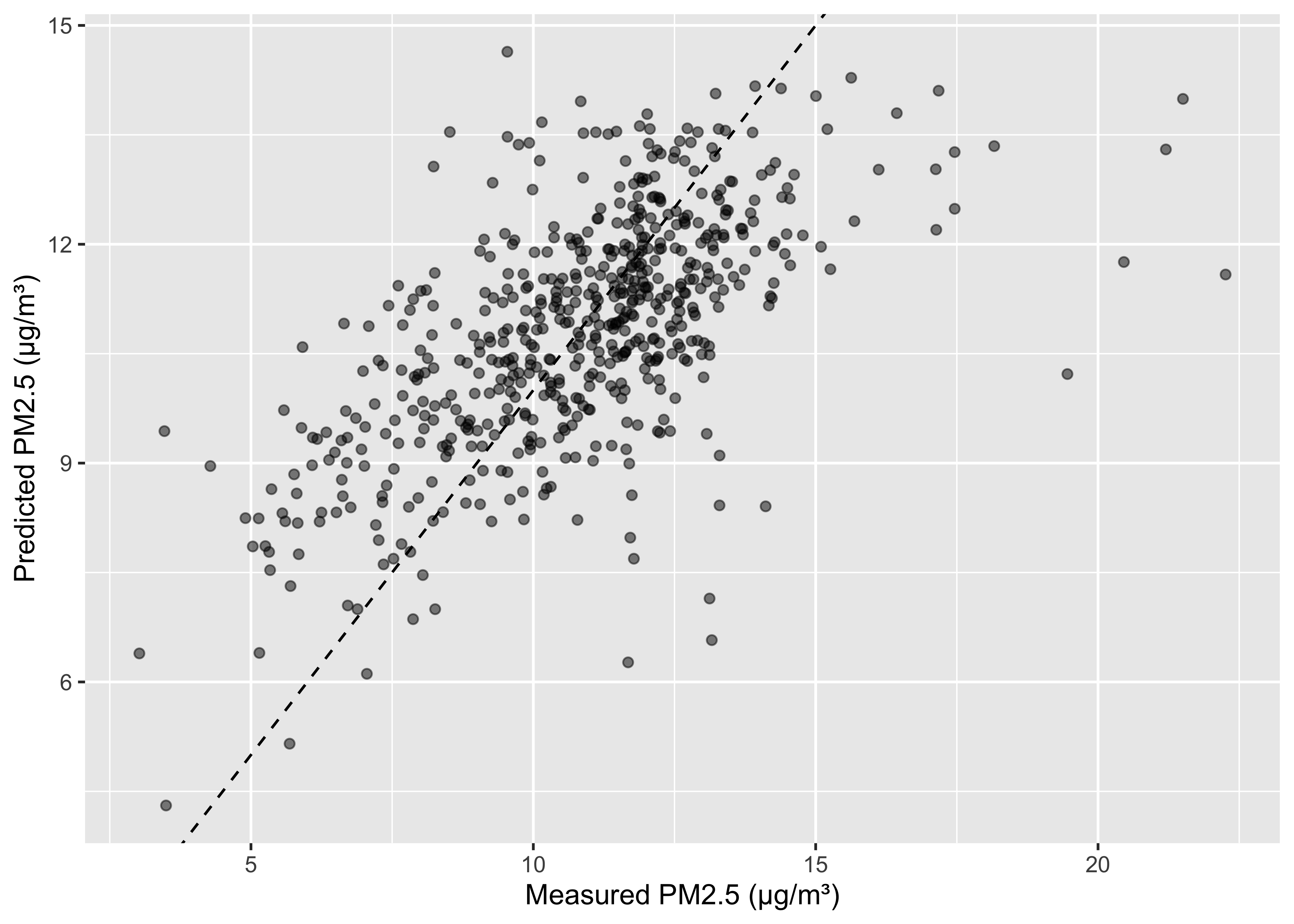
❓ What do you notice about/learn from these results?
Cross-Validation
Resampling + Re-partitioning:
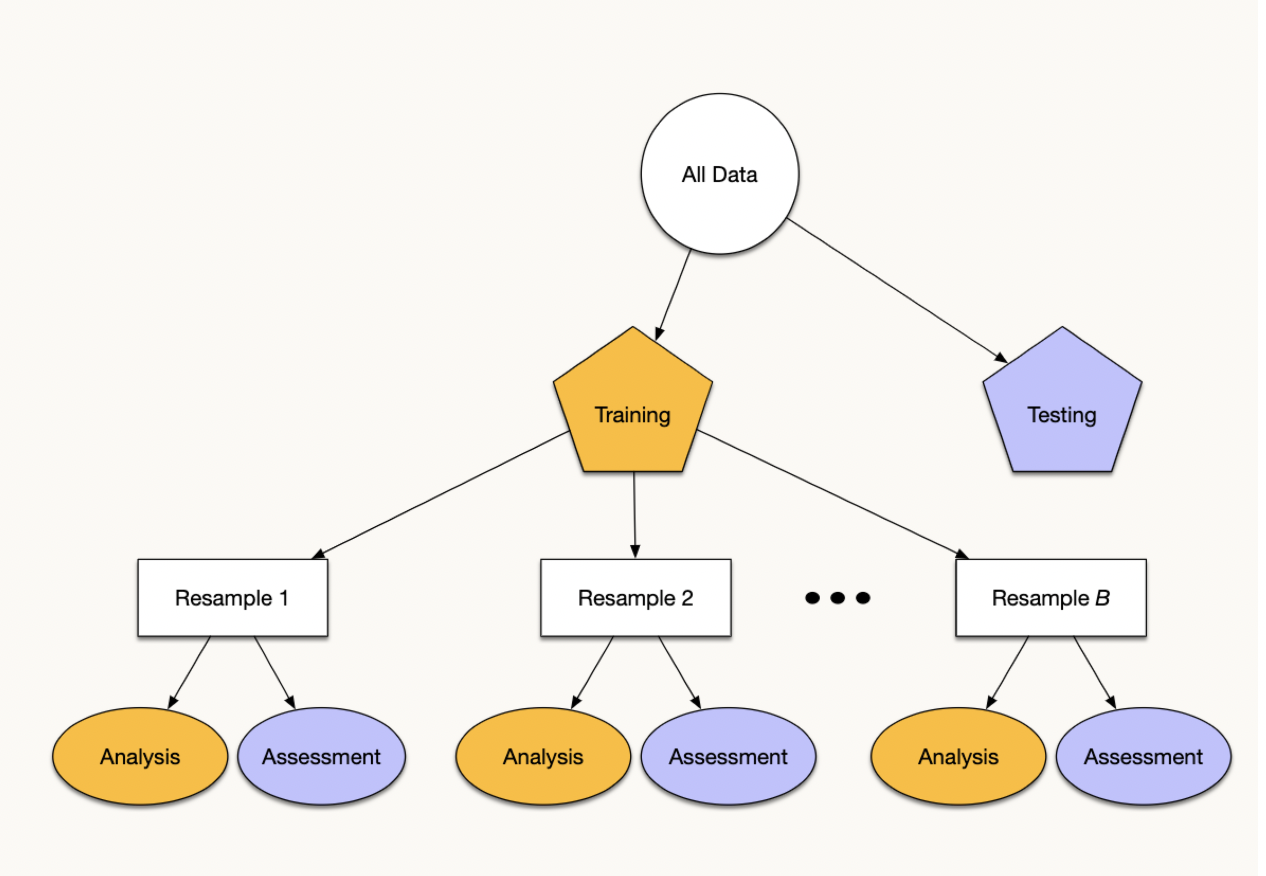
Preparing the data for cross-validation:
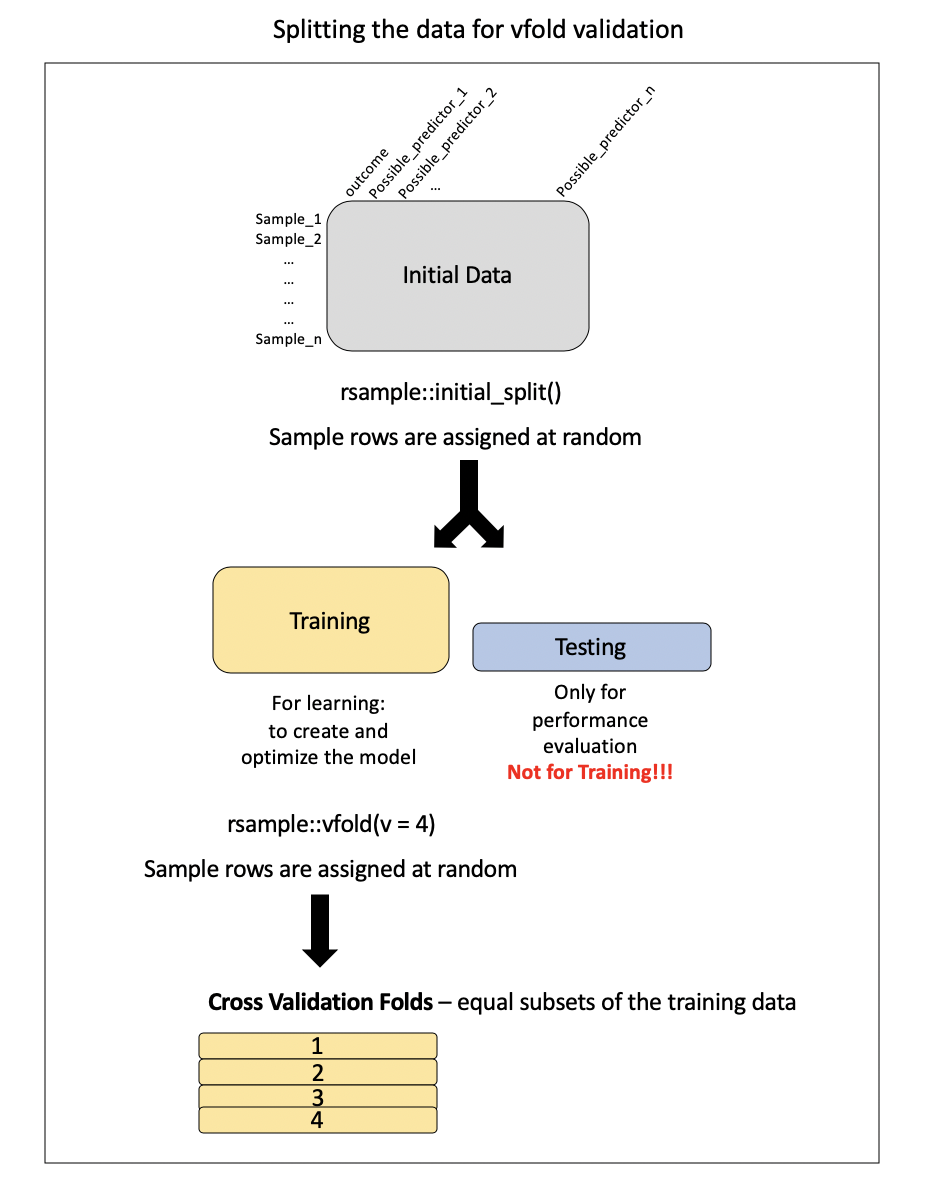
Note: this is called v-fold or k-fold CV
Implementing in rsample()
#  4-fold cross-validation
# A tibble: 4 × 2
  splits            id
  <list>            <chr>
1 <split [438/146]> Fold1
2 <split [438/146]> Fold2
3 <split [438/146]> Fold3
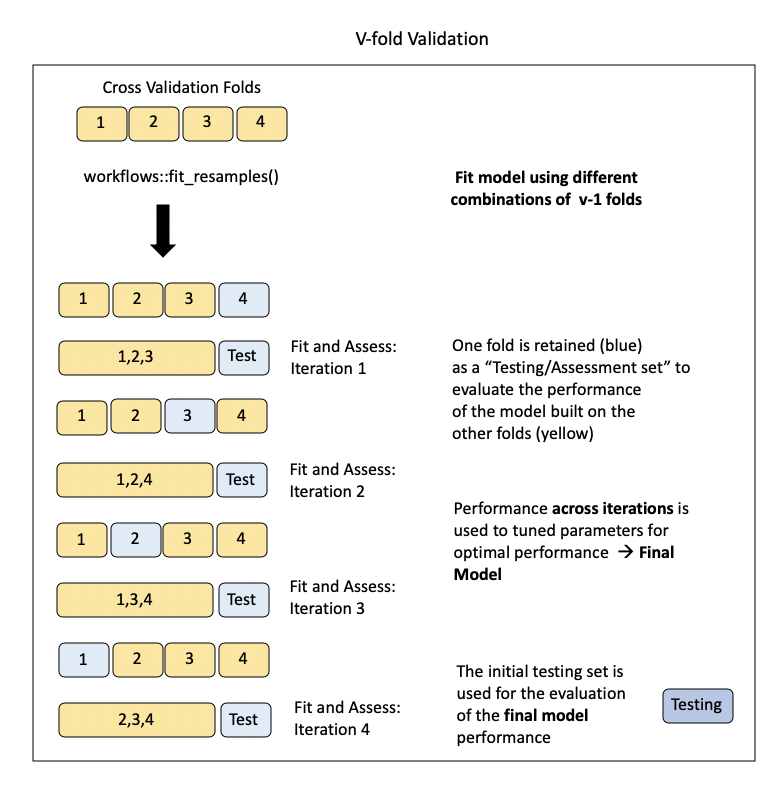
4 <split [438/146]> Fold4Visualizing this process:
Random Forest
Fitting a different model…is based on a decision tree:
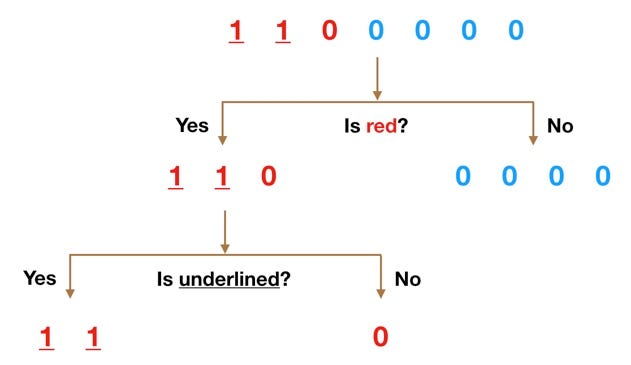
[source]
Visualizing a RF
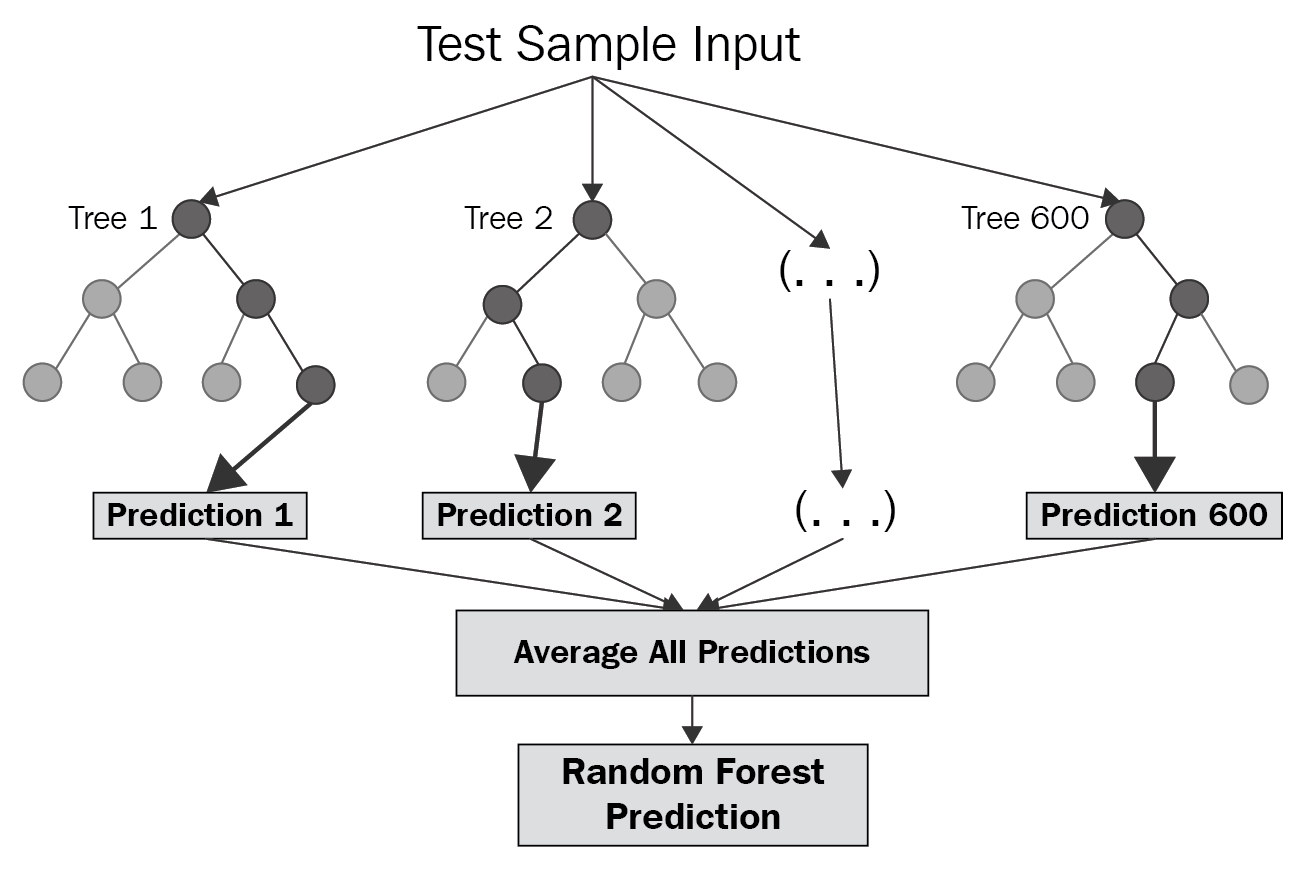
Feature Importance: Results
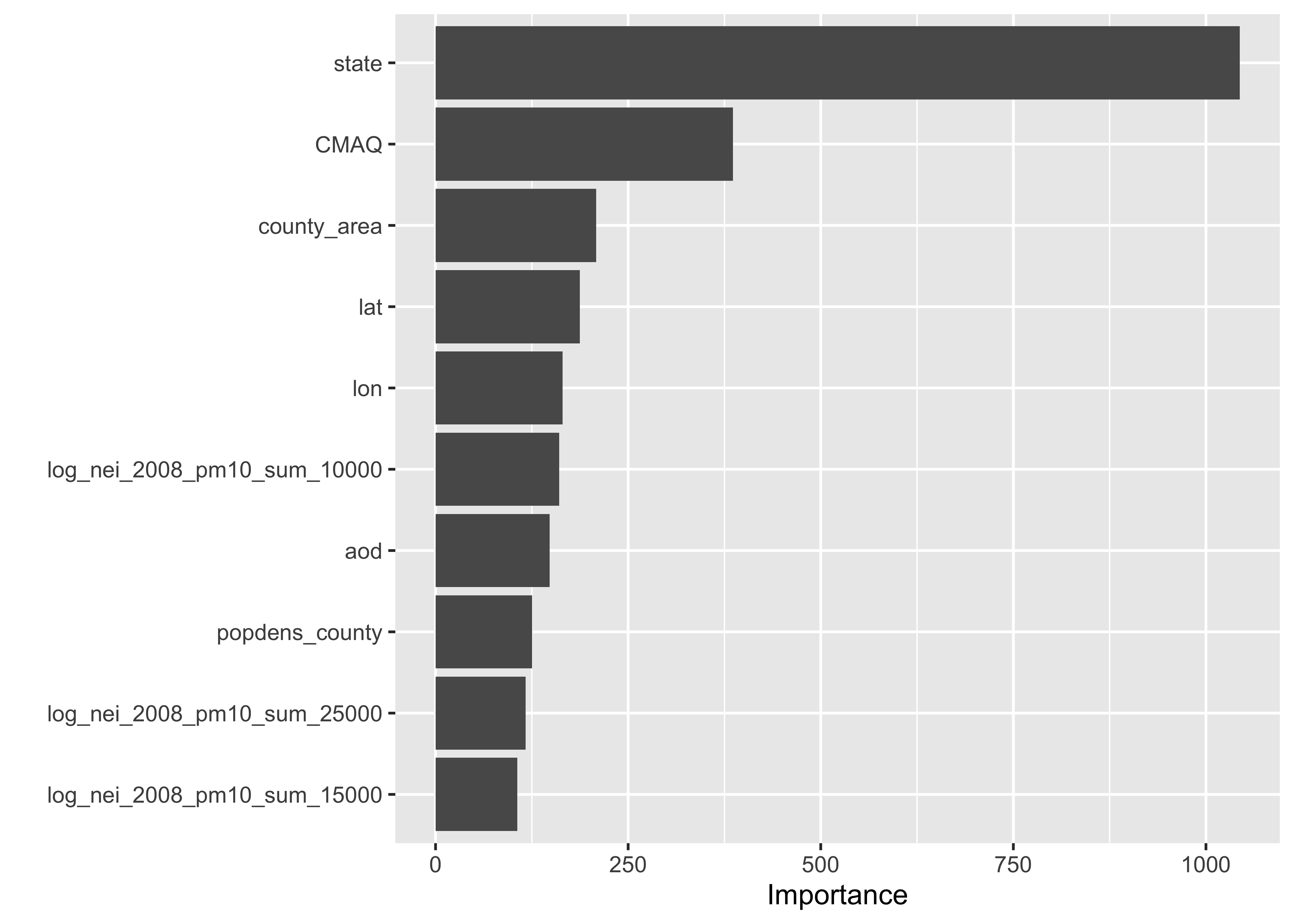
- For
randomForest, importance = how much splitting on that variable reduces prediction error, added up across all the trees - Again: what the model relies on, not what causes pollution
❓ What’s your interpretation of these results?
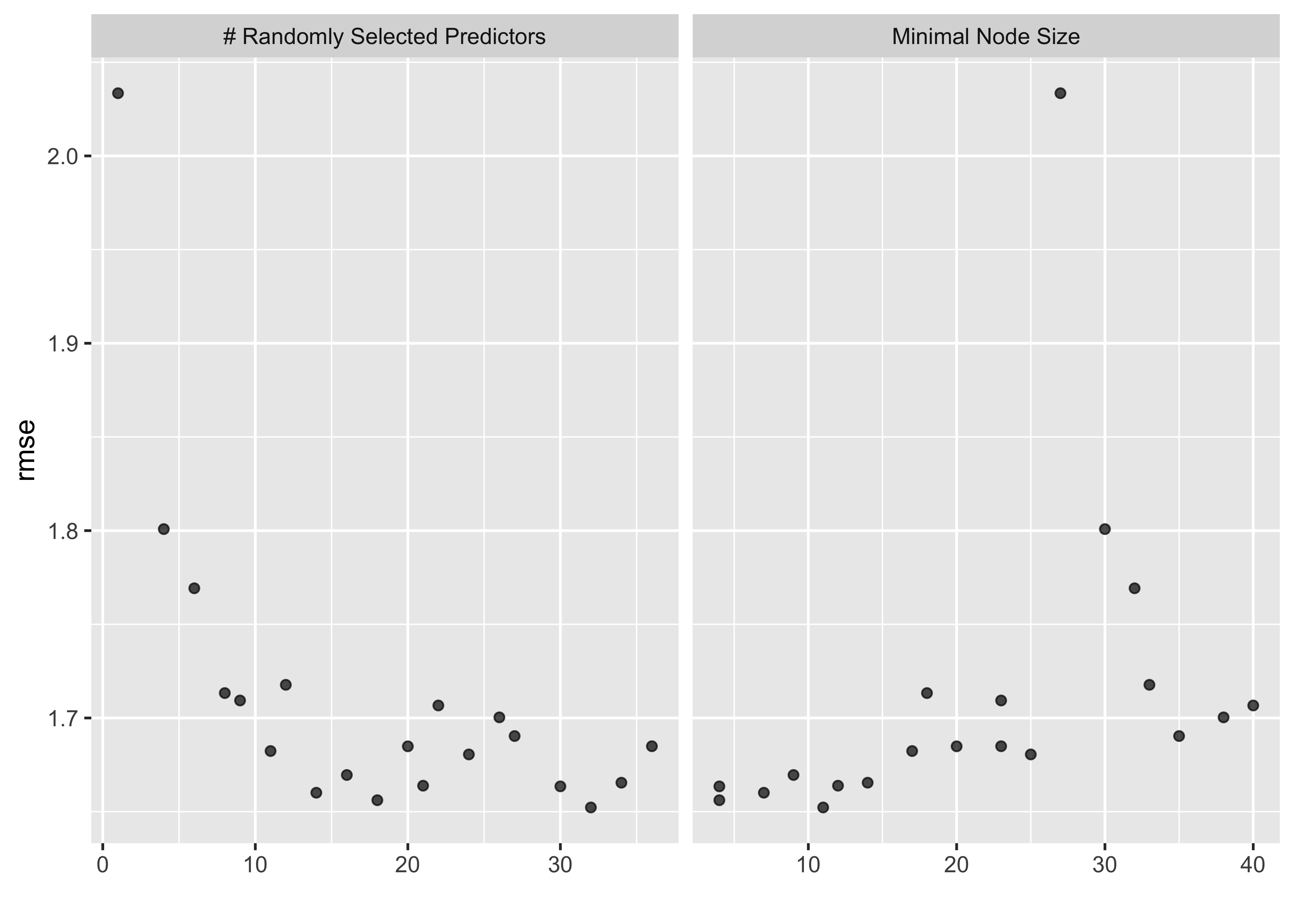
Check Metrics:
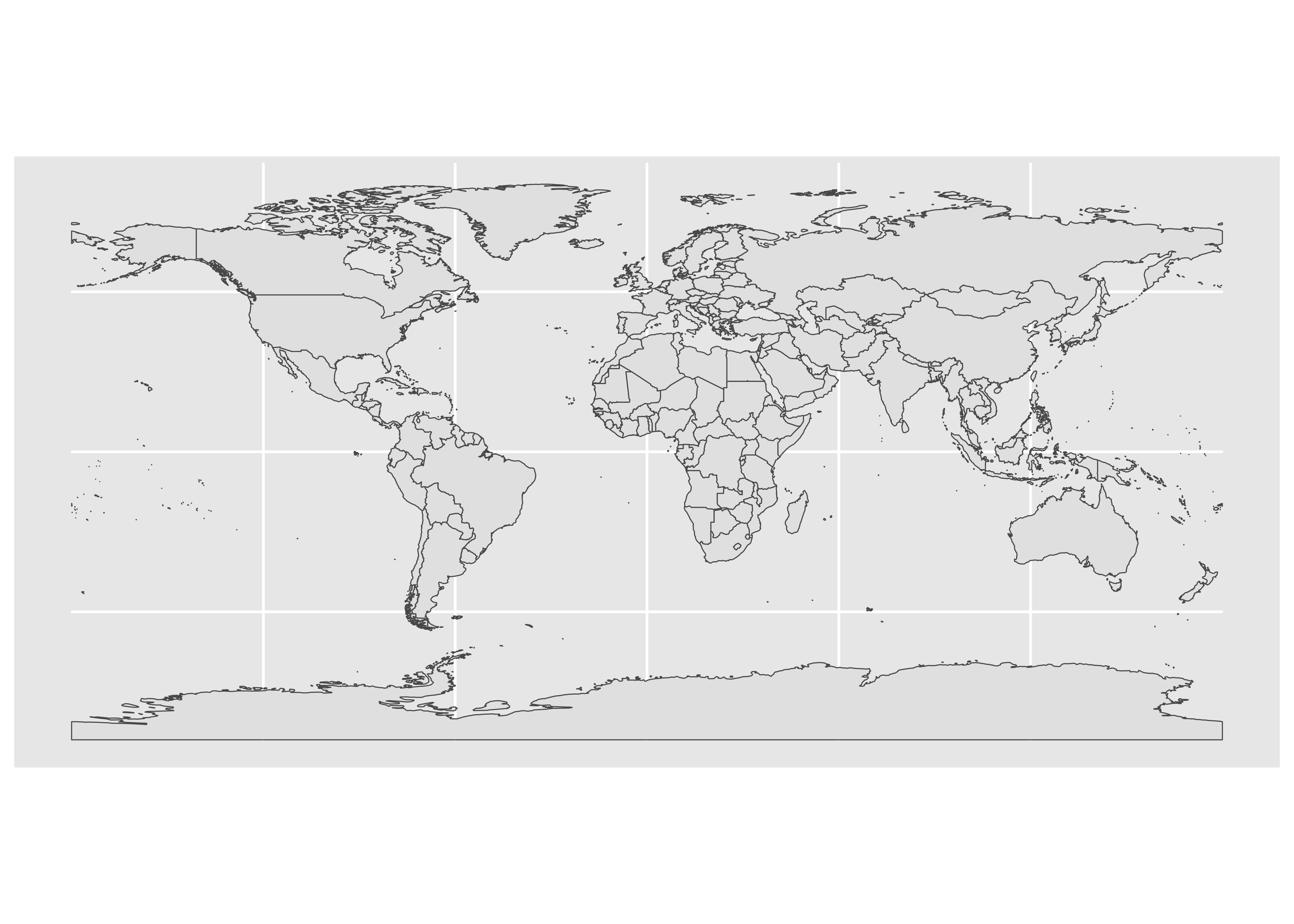
World map:
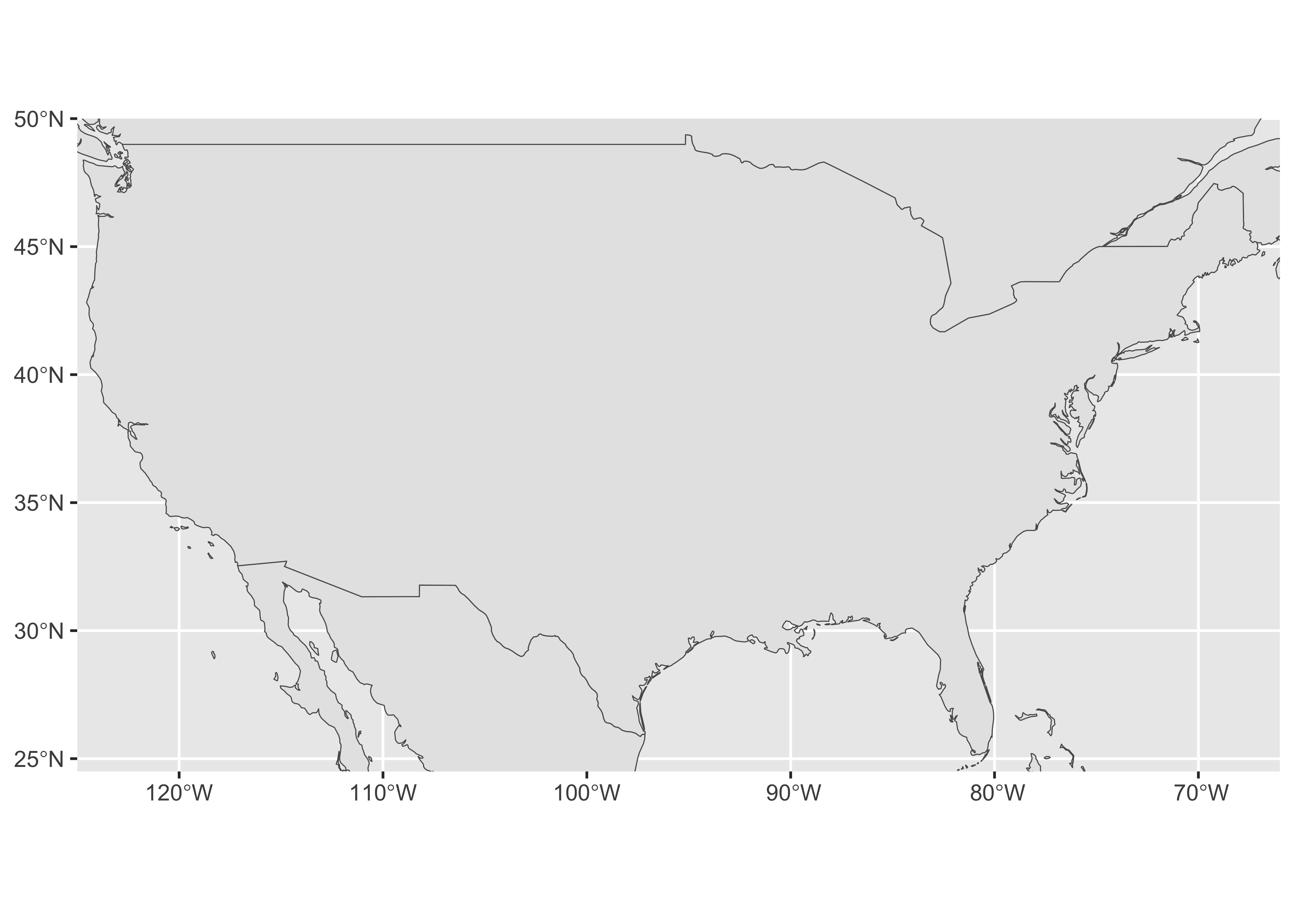
Just the US
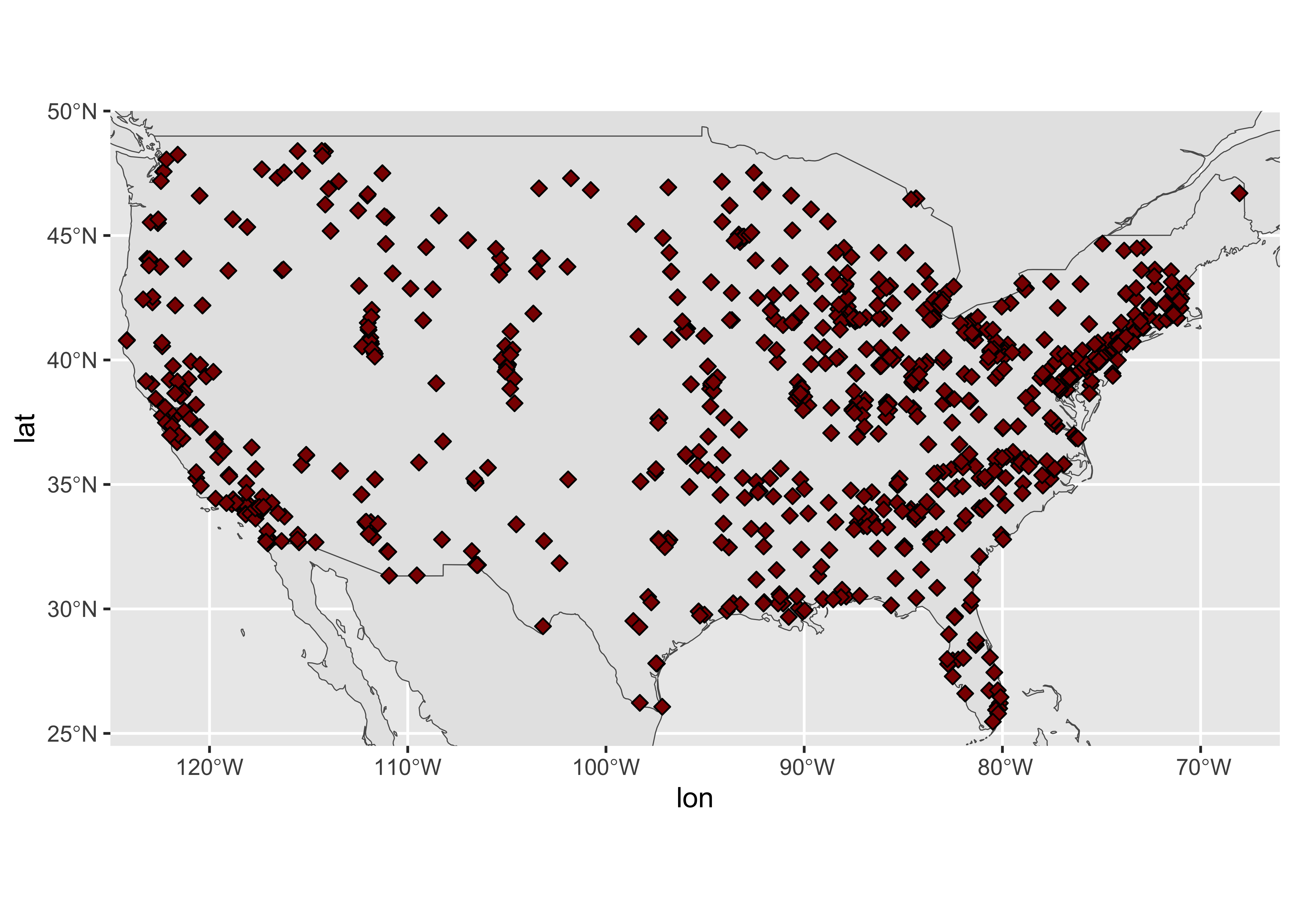
Monitor Data
Adding in our monitors…
The Map
monitors <- ggplot(data = world) +
    geom_sf(data = counties, fill = NA, color = gray(.5))+
      coord_sf(xlim = c(-125, -66), ylim = c(24.5, 50),
             expand = FALSE) +
    geom_point(data = pm, aes(x = lon, y = lat), size = 2,
               shape = 23, fill = "darkred") +
    ggtitle("Monitor Locations") +
    theme(axis.title.x=element_blank(),
          axis.text.x = element_blank(),
          axis.ticks.x = element_blank(),
          axis.title.y = element_blank(),
          axis.text.y = element_blank(),
          axis.ticks.y = element_blank())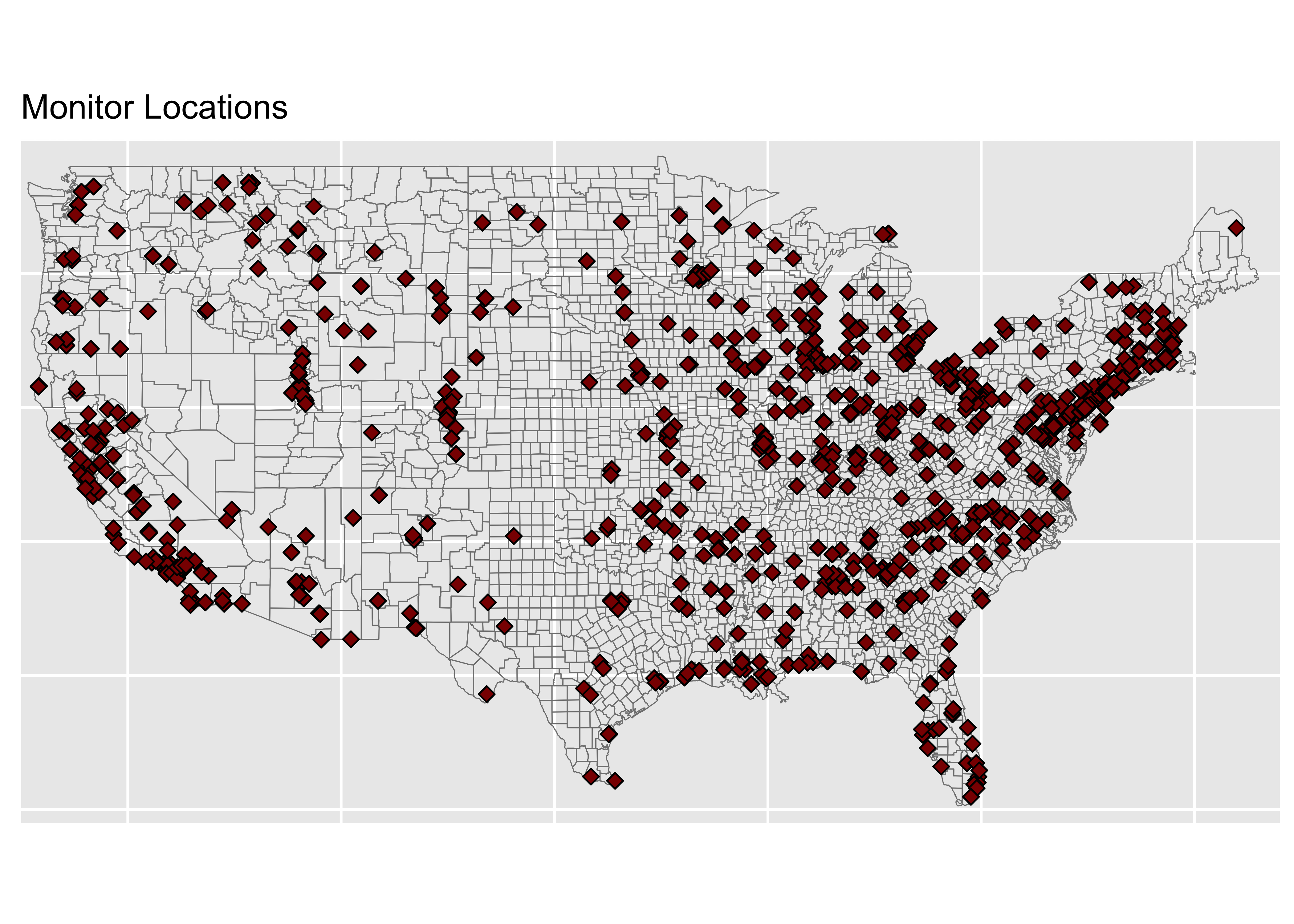
Map: Truth
# shared styling for our PM2.5 maps
states <- sf::st_as_sf(maps::map("state", plot = FALSE, fill = TRUE))

pm_scale <- scale_fill_viridis_c(option = "magma", direction = -1,
                                 limits = c(0, 23.5), na.value = "grey92",
                                 name = "PM2.5\n(µg/m³)")

map_style <- list(
  geom_sf(data = states, fill = NA, color = "grey50", linewidth = 0.2),
  coord_sf(crs = 5070),   # equal-area projection: the US looks like the US
  theme_void(),
  theme(plot.title = element_text(face = "bold"))
)

truth <- ggplot() +
  geom_sf(data = map_data, aes(fill = value), color = NA) +
  pm_scale +
  map_style +
  ggtitle("Measured", subtitle = "grey = no monitor")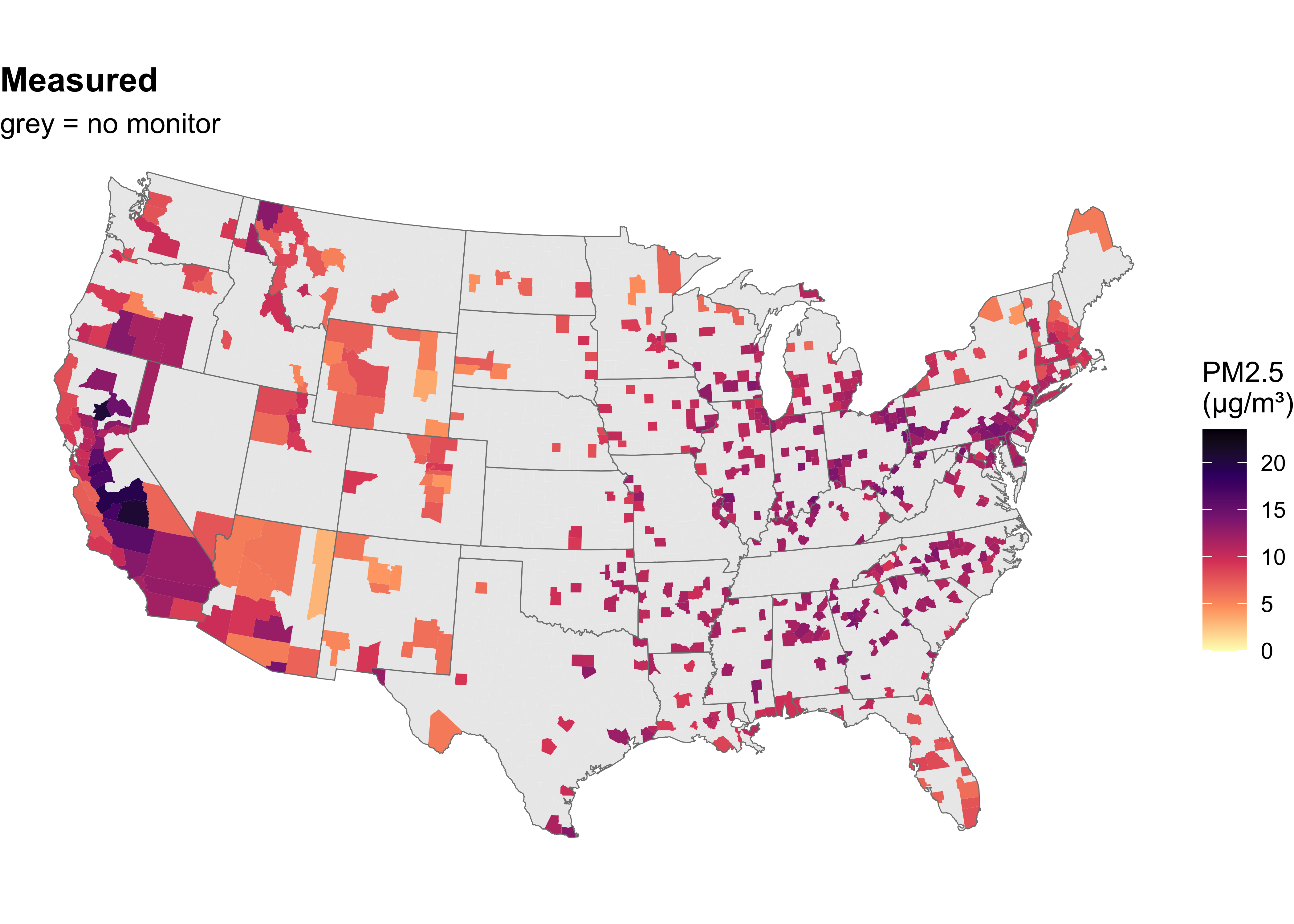
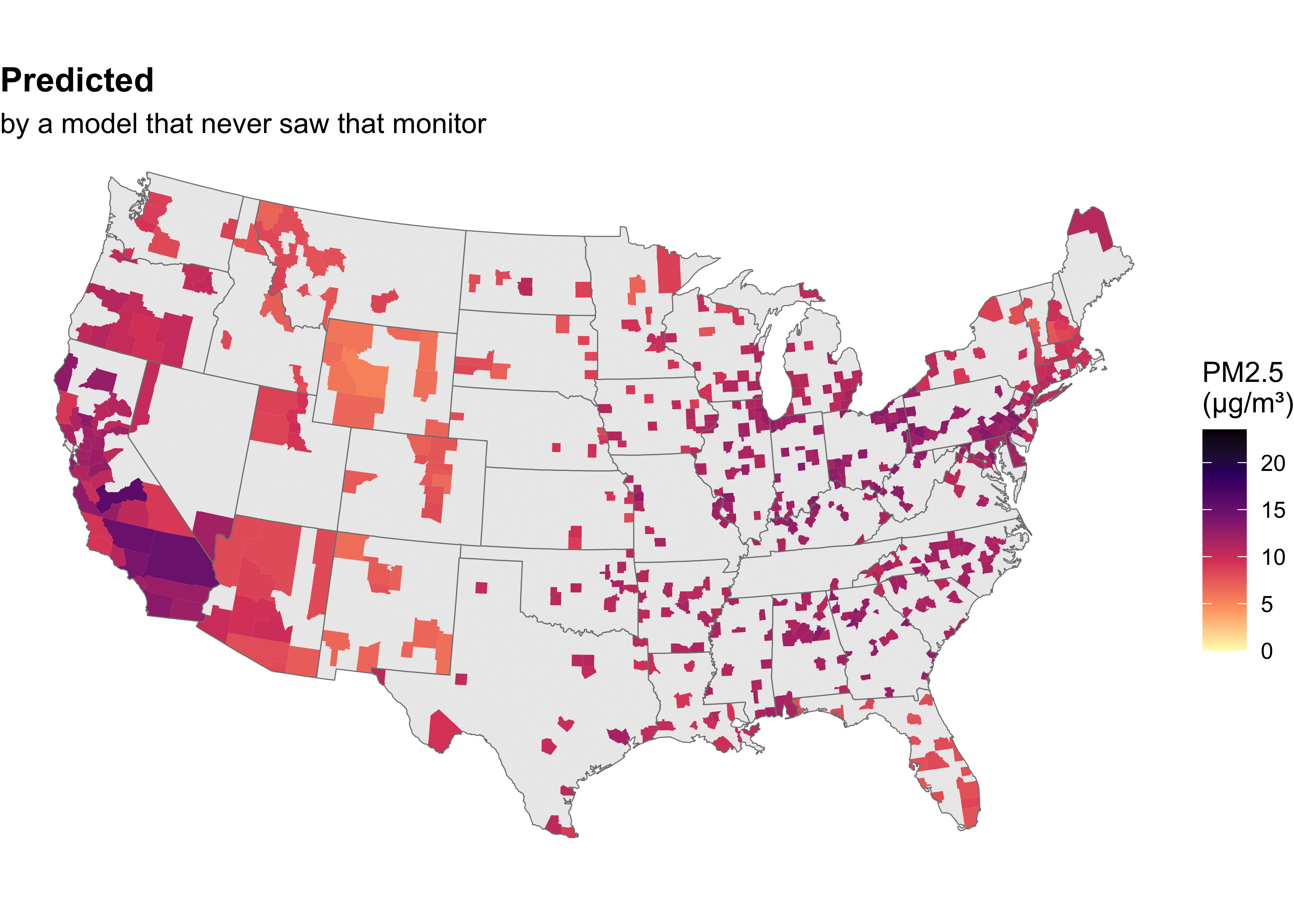
Map: Predictions
Every monitor gets a prediction from a model that never saw it:
# training monitors: out-of-fold predictions from cross-validation
# (.row = row number in train_pm)
set.seed(456)
cv_preds <- fit_resamples(RF_tuned_wflow, vfold_pm,
                          control = control_resamples(save_pred = TRUE)) |>
  collect_predictions()

train_preds <- train_pm |>
  mutate(.row = row_number()) |>
  inner_join(select(cv_preds, .row, .pred), by = ".row")

# test monitors: predictions from last_fit() (.row = row number in pm)
test_preds <- pm |>
  mutate(.row = row_number()) |>
  inner_join(select(test_predictions, .row, .pred), by = ".row")

# combine and average within county
county_pred <- bind_rows(train_preds, test_preds) |>
  mutate(key = county_key(state, county)) |>
  group_by(key) |>
  summarize(.pred = mean(.pred))
Note: don’t predict the training data with a model fit to the training data (or the test data with a model fit to the test data). Those predictions look great…because the model has already seen the answers.
Map: Where the model misses
county_resid <- inner_join(county_truth, county_pred, by = "key") |>
  mutate(resid = .pred - value)

map_data <- left_join(counties, county_resid, by = "key")

resid <- ggplot() +
  geom_sf(data = map_data, aes(fill = resid), color = NA) +
  scale_fill_distiller(palette = "RdBu", limits = c(-5, 5),
                       oob = scales::squish, na.value = "grey92",
                       name = "Predicted −\nmeasured\n(µg/m³)") +
  map_style +
  ggtitle("Where the model misses", subtitle = "red = too high, blue = too low")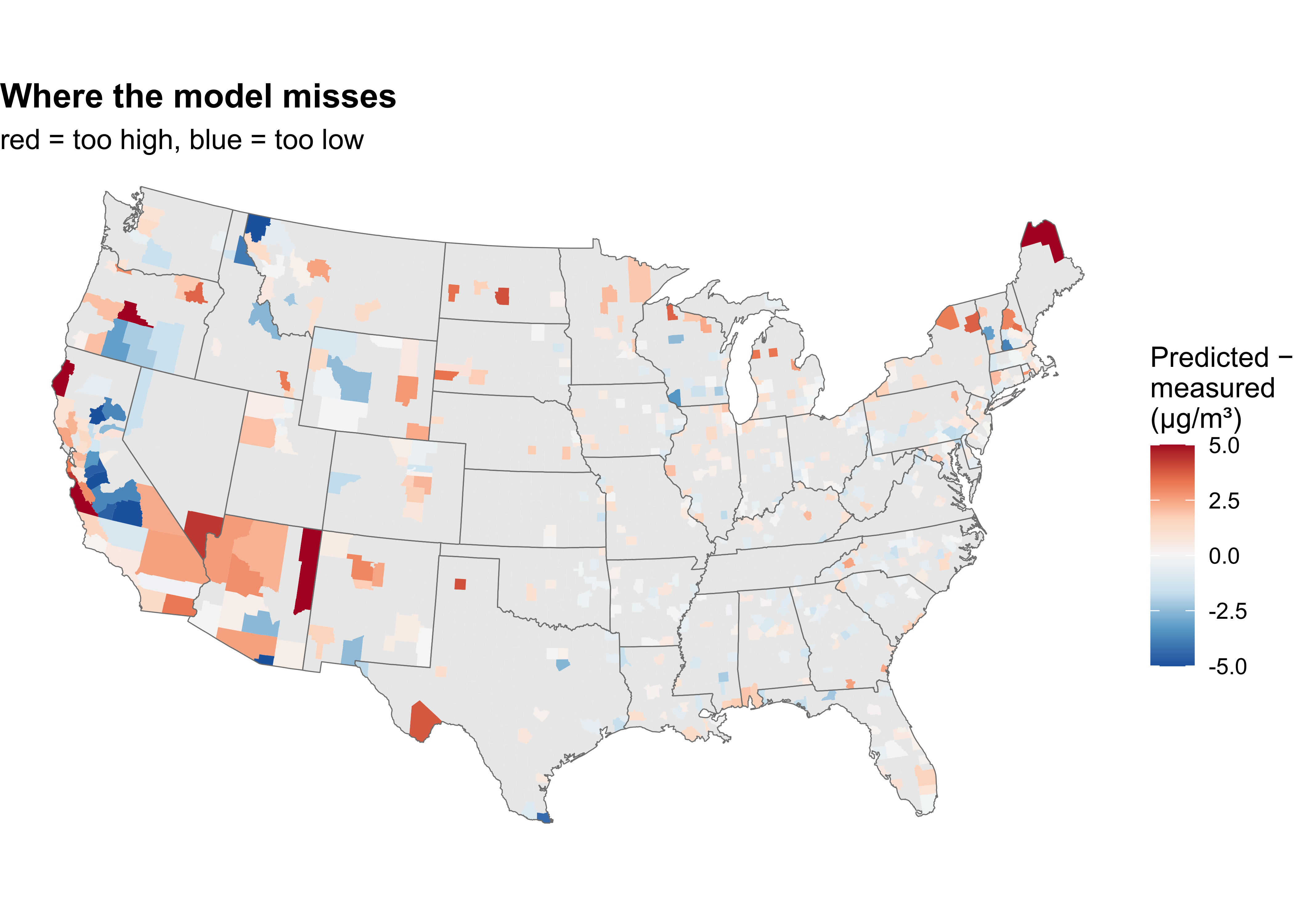
- Red: the model predicted too high; blue: too low (misses beyond ±5 µg/m³ get the darkest color)
❓ Do the misses look random, or are there regional patterns? What might explain them?
Final Plot
library(patchwork)

final_plot <- (truth | pred | resid) +
  plot_layout(guides = "collect") +
  plot_annotation(title = "Machine Learning Methods Allow for Prediction of Air Pollution", subtitle = paste0("A random forest model predicts annual fine particulate matter (PM 2.5) levels at monitors it was not trained on to within\nabout ", round(test_rmse, 1), " ug/m3 on average (test RMSE), using population density, emissions, and other predictors. Similar methods\ncould help estimate pollution in places with poor monitoring."),
                  theme = theme(plot.title = element_text(size =12, face = "bold"),
                                plot.subtitle = element_text(size = 8))) &
  theme(legend.position = "bottom")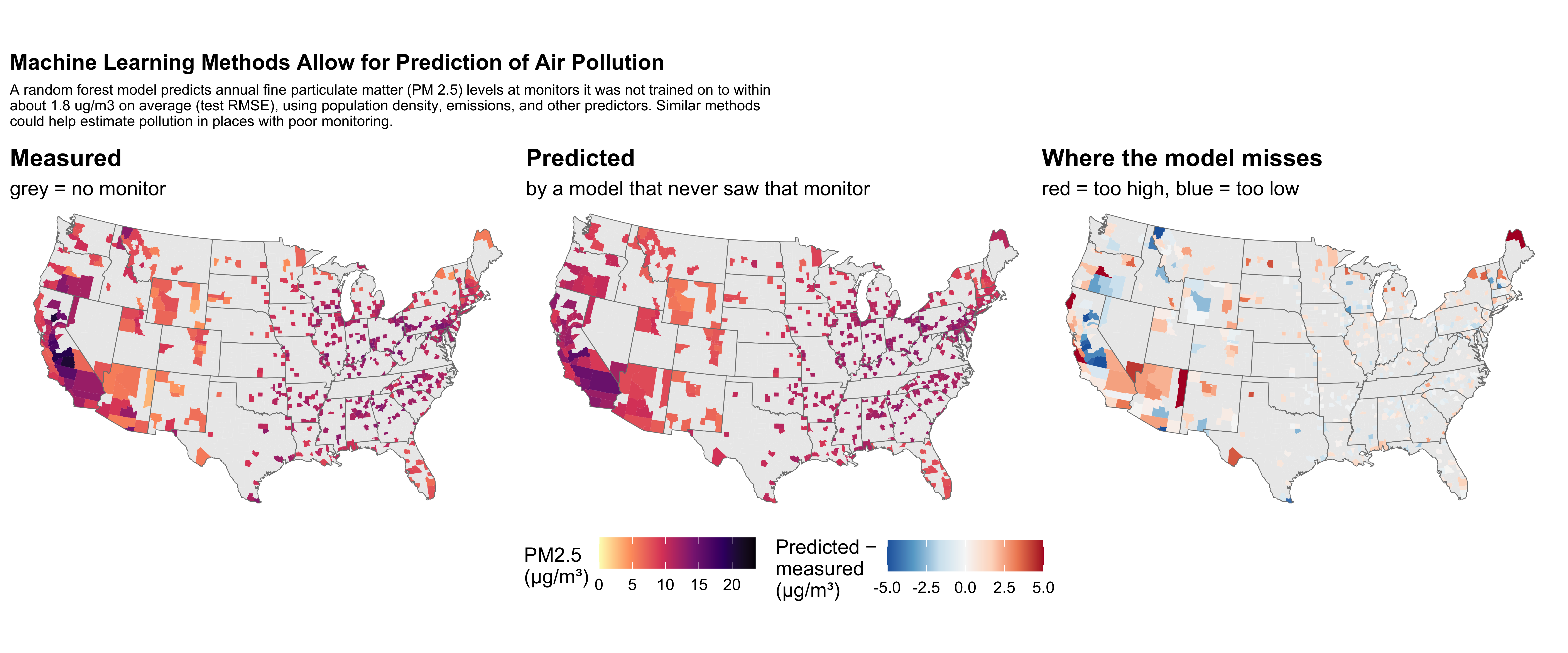
❓ What do you learn from these results?
Your Case Study
- Can you copy + paste code directly from here to answer the question? Yes.
- Do you have to present linear regression model and random forest? No.
- Should you present anything from the 13-regression notes? Probably not…unless your extension asks an inference-based question. (This is why lab07 focused on regression.)
- Could you try an additional model as your extension? Yes!
- Does that model have to be “better”? No! But, consider the story!
- Could you try to identify the simplest, accurate model as an extension? Yes.